

NewsDetails
CNC Machining Process Optimization for Complex Pipe Fittings
author:Kiyama time:2026-04-14 18:50:40 Click:177
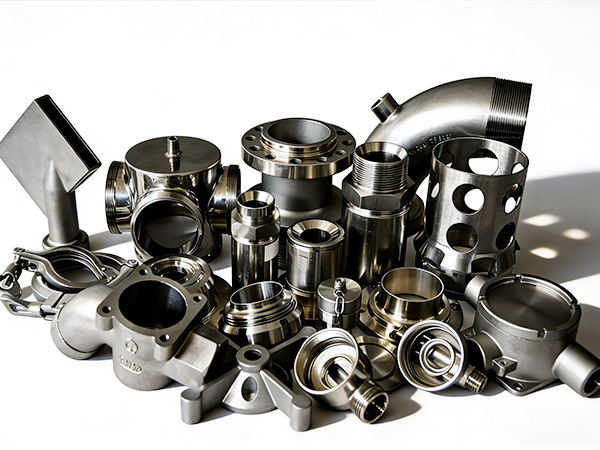
Complex pipe fittings—such as multi-branch tees, reducers with varying wall thickness, and precision threaded components—require advanced CNC machining strategies to achieve tight tolerances, high surface quality, and cost-effective production. Process optimization is essential to improve efficiency, reduce defects, and ensure consistent product quality in demanding industrial applications.
Challenges in Machining Complex Pipe Fittings
Before optimization, it is important to understand the typical challenges:
Complex geometries and multi-axis features
Tight dimensional tolerances and thread accuracy
Difficult-to-machine materials (e.g., stainless steel, alloy steel)
Internal cavities and intersecting bores
Risk of deformation due to thin walls or residual stress
Addressing these challenges requires a combination of advanced technology and process control.
Optimizing CNC Machining Strategies
Multi-Axis Machining
Using 4-axis or 5-axis CNC machines significantly improves efficiency:
Enables machining of complex geometries in fewer setups
Reduces repositioning errors
Improves overall accuracy and surface consistency
Multi-axis machining is especially beneficial for fittings with angled branches and intricate internal structures.
Process Planning and Toolpath Optimization
Efficient toolpath design is key to precision and productivity:
Minimize unnecessary tool movements
Use smooth toolpaths to reduce vibration and tool wear
Apply adaptive machining strategies for consistent cutting loads
CAM software plays a critical role in generating optimized toolpaths for complex parts.
Fixture and Clamping Design
Proper workholding ensures stability during machining:
Use custom fixtures tailored to fitting geometry
Ensure uniform clamping force to prevent deformation
Allow easy access to multiple machining surfaces
Well-designed fixtures reduce setup time and improve repeatability.
Cutting Tool Selection
Tooling directly affects machining quality and efficiency:
Use high-performance carbide or coated tools for hard materials
Select appropriate tool geometry for internal and external features
Apply specialized thread cutting tools for precise threading
Regular tool inspection and replacement are essential to maintain accuracy.
Cutting Parameters Optimization
Optimizing machining parameters improves both quality and productivity:
Adjust cutting speed and feed rate based on material properties
Control depth of cut to avoid excessive tool load
Use proper coolant strategies to reduce heat and improve chip removal
Balanced parameters help prevent tool wear and surface defects.
Improving Dimensional Accuracy
In-Process Measurement
Use probing systems to measure critical dimensions during machining
Adjust tool offsets automatically based on measurement data
This reduces the need for rework and ensures consistent tolerances.
Thermal Control
Temperature variations can affect machining precision:
Maintain stable workshop temperature
Use coolant to control heat generation
Allow machines to reach thermal stability before operation
Thermal management is crucial for high-precision components.
Surface Finish Optimization
Surface quality is essential for sealing performance and assembly:
Use finishing passes with low feed rates
Apply fine cutting tools for smooth surfaces
Perform deburring and polishing as secondary processes
High-quality surface finish reduces leakage risk and improves product reliability.
Thread Machining Optimization
Threads are critical features in pipe fittings:
Use precision thread cutting cycles or thread milling
Ensure compliance with standards (NPT, BSPT, BSPP)
Inspect threads using go/no-go gauges
Accurate threading ensures proper sealing and compatibility.
Automation and Digital Integration
CNC Automation
Use automatic tool changers to reduce downtime
Implement robotic loading/unloading for mass production
Integrate pallet systems for continuous operation
Automation increases productivity and consistency.
Data Monitoring and Process Control
Use real-time monitoring systems to track machine performance
Apply statistical process control (SPC) to detect deviations
Analyze production data for continuous improvement
Digital tools enhance process stability and efficiency.
Reducing Production Costs
Optimization also focuses on cost efficiency:
Minimize material waste through efficient machining strategies
Reduce cycle time with optimized toolpaths and setups
Extend tool life through proper parameter selection
Balancing quality and cost is key to competitive manufacturing.
Quality Control and Inspection
To ensure optimized processes deliver results:
Conduct dimensional inspection using CMM
Perform surface roughness testing
Inspect threads and critical features
Consistent quality checks validate process improvements.
Continuous Improvement
Process optimization is an ongoing effort:
Collect feedback from production and inspection
Update machining programs regularly
Invest in new technologies and training
Continuous improvement ensures long-term competitiveness.
Conclusion
Optimizing CNC machining processes for complex pipe fittings requires a holistic approach that includes advanced equipment, efficient toolpaths, proper tooling, and strict quality control. By addressing challenges such as geometry complexity, material properties, and precision requirements, manufacturers can achieve high-quality, cost-effective production.
Through the integration of automation, data monitoring, and continuous improvement strategies, CNC machining operations can deliver consistent performance and meet the growing demands of modern industrial applications.
References
Groover, M.P. Fundamentals of Modern Manufacturing, Wiley
Kalpakjian, S., & Schmid, S. Manufacturing Engineering and Technology, Pearson
ISO 2768 – General Tolerances for Machining
ASM Handbook, Volume 16 – Machining, ASM International
ISO 9001 – Quality Management Systems Requirements
 Recommended Products
.jpg)
.jpg)
.jpg)
.jpg)
.jpg) Contact us
Contact us
—— Contact:Mr. Meng
—— Tel:+86 18233783692
—— Email:mengfy001@gmail.com
—— Url:https://www.kiyama-pipefitting.com
—— Address:Cangzhou Economic and Technological Development Zone, Cangzhou City, Hebei Province, China