

NewsDetails
How to Ensure Precision of CNC Machined Pipe Fittings
author:Kiyama time:2026-04-14 18:13:56 Click:130
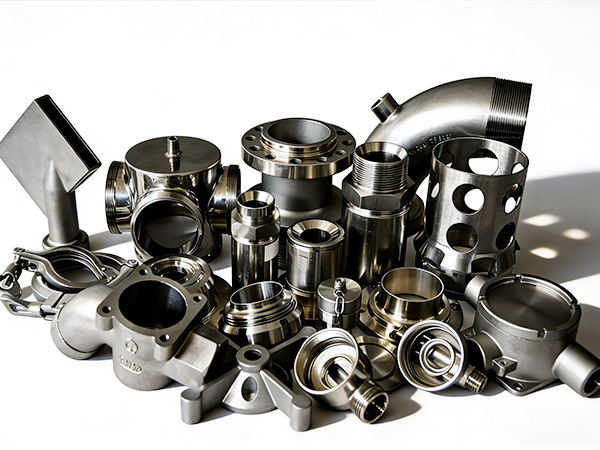
Precision is critical in CNC machined pipe fittings, as even minor deviations can lead to leakage, poor sealing, or system failure. High-precision fittings ensure proper thread engagement, tight tolerances, and reliable performance in demanding industrial applications such as oil & gas, hydraulics, and chemical processing. Achieving this level of accuracy requires strict control over design, materials, machining processes, and quality inspection.
Importance of Precision in Pipe Fittings
CNC machined pipe fittings must meet exact dimensional and geometric requirements to:
Ensure leak-free connections
Maintain pressure integrity
Achieve proper thread compatibility (e.g., NPT, BSPT, BSPP)
Reduce wear and improve service life
Precision directly affects both performance and safety in fluid transfer systems.
High-Quality Raw Material Selection
Precision starts with the right material.
Use certified materials such as stainless steel (304, 316), carbon steel, or alloy steel
Ensure uniform composition and mechanical properties
Avoid materials with internal defects, inclusions, or inconsistent hardness
Stable material quality minimizes deformation during machining.
Advanced CNC Machining Equipment
Modern CNC machines play a key role in achieving tight tolerances.
Use high-precision CNC lathes and machining centers
Ensure machines are regularly calibrated and maintained
Utilize multi-axis machining for complex geometries
Stable machine performance ensures repeatability and consistency.
Tooling and Cutting Parameters Optimization
Cutting tools and parameters significantly influence machining accuracy.
Select high-quality, wear-resistant cutting tools
Optimize cutting speed, feed rate, and depth of cut
Use proper cooling and lubrication to reduce thermal distortion
Worn or inappropriate tools can lead to dimensional errors and poor surface finish.
Thread Machining Accuracy
Thread quality is critical for pipe fittings.
Use precision thread cutting or thread rolling processes
Ensure compliance with standards such as NPT, BSPT, or BSPP
Control thread angle, pitch, and taper accurately
Proper thread machining ensures tight sealing and compatibility.
Tolerance Control and Process Stability
Maintaining tight tolerances requires process consistency.
Define clear tolerance ranges based on application requirements
Implement statistical process control (SPC) to monitor variation
Minimize vibration and thermal expansion during machining
Consistent processes reduce defects and rework.
Surface Finish and Deburring
Surface quality affects sealing performance and assembly.
Achieve smooth surface finishes to reduce friction and leakage risk
Remove burrs and sharp edges after machining
Use polishing or secondary finishing if required
Clean and smooth surfaces improve both function and appearance.
Precision Measurement and Inspection
Inspection is essential to verify machining accuracy.
Use measuring tools such as calipers, micrometers, and thread gauges
Apply coordinate measuring machines (CMM) for complex geometries
Conduct thread inspection using go/no-go gauges
Regular inspection ensures compliance with specifications.
Quality Control System
A robust quality management system ensures consistent precision.
Follow standards such as ISO 9001 for quality management
Implement in-process and final inspections
Maintain traceability of materials and production batches
Systematic quality control reduces variability and enhances reliability.
Skilled Operators and Programming
Human expertise remains crucial in CNC machining.
Employ experienced operators and programmers
Optimize CNC programs for efficiency and accuracy
Continuously train staff on new technologies and standards
Skilled personnel help prevent errors and improve overall quality.
Environmental and Thermal Control
Environmental factors can affect machining precision.
Maintain stable workshop temperature to reduce thermal expansion
Control humidity to prevent material changes
Minimize machine vibration and external disturbances
A controlled environment supports consistent machining results.
Continuous Improvement
Precision manufacturing is an ongoing process.
Analyze production data to identify improvement opportunities
Implement feedback loops from inspection results
Upgrade equipment and processes as needed
Continuous improvement ensures long-term competitiveness and quality.
Conclusion
Ensuring precision in CNC machined pipe fittings requires a comprehensive approach that includes high-quality materials, advanced machining technology, optimized processes, and strict quality control. From thread accuracy to surface finish and dimensional tolerances, every step plays a vital role in achieving reliable, high-performance fittings.
By focusing on precision at every stage of production, manufacturers can deliver products that meet stringent industry standards and perform reliably in critical applications.
References
ISO 2768 – General Tolerances for Machining
ASME B1.20.1 – Pipe Threads, General Purpose (Inch)
Kalpakjian, S., & Schmid, S. Manufacturing Engineering and Technology, Pearson
Groover, M.P. Fundamentals of Modern Manufacturing, Wiley
ISO 9001 – Quality Management Systems Requirements
 Recommended Products
.jpg)
.jpg)
.jpg)
.jpg)
.jpg) Contact us
Contact us
—— Contact:Mr. Meng
—— Tel:+86 18233783692
—— Email:mengfy001@gmail.com
—— Url:https://www.kiyama-pipefitting.com
—— Address:Cangzhou Economic and Technological Development Zone, Cangzhou City, Hebei Province, China