

NewsDetails
Application of Custom Pipe Fittings in Hydraulic Equipment
author:Kiyama time:2026-04-14 18:59:25 Click:62
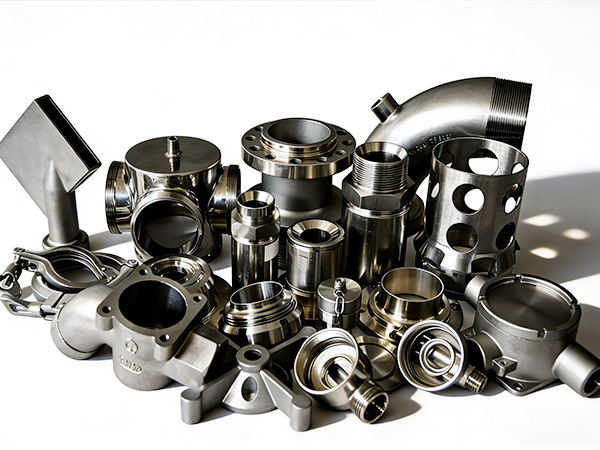
Custom pipe fittings play a critical role in hydraulic equipment by ensuring precise fluid control, leak-free connections, and system adaptability in complex hydraulic circuits. Unlike standard fittings, custom-designed components are engineered to match specific pressure requirements, spatial constraints, flow characteristics, and equipment configurations.
In modern hydraulic systems—used in construction machinery, industrial automation, aerospace, and heavy equipment—custom pipe fittings are essential for achieving high performance, safety, and efficiency.
1. Why Custom Pipe Fittings Are Needed in Hydraulic Systems
Hydraulic systems often operate under demanding conditions:
High pressure (often 10–70 MPa or higher)
Continuous vibration and dynamic loads
Compact installation spaces
Complex pipeline routing requirements
Standard fittings may not meet these constraints, while custom fittings provide:
Precise dimensional adaptation
Optimized flow paths
Enhanced sealing performance
Improved structural integration with equipment
2. Key Functional Roles in Hydraulic Equipment
Ensuring Leak-Free High-Pressure Sealing
Hydraulic systems rely on incompressible fluids, meaning even small leaks cause:
Pressure loss
Efficiency reduction
Safety hazards
Custom fittings improve sealing by:
Precision-machined sealing surfaces
Optimized thread profiles or welded joints
Compatibility with high-performance seals and O-rings
Optimizing Fluid Flow Efficiency
Poorly designed piping increases energy loss.
Custom fittings help by:
Reducing turbulence in bends and junctions
Designing smooth internal flow channels
Minimizing pressure drop across connections
This improves overall hydraulic efficiency.
Adapting to Complex System Layouts
Hydraulic machinery often has limited installation space.
Custom fittings allow:
Non-standard angles and geometries
Multi-port connections
Compact integrated designs
This reduces piping complexity and installation time.
3. Common Applications in Hydraulic Equipment
1. Construction Machinery
Custom fittings are widely used in:
Excavators
Bulldozers
Loaders
Cranes
They support hydraulic cylinders, boom systems, and control valves under heavy load conditions.
2. Industrial Hydraulic Press Systems
In high-force pressing equipment:
Maintain ultra-high pressure stability
Connect multi-stage hydraulic circuits
Ensure synchronized force distribution
Custom fittings reduce risk of pressure failure in critical operations.
3. Injection Molding Machines
Used for:
Hydraulic clamping systems
Injection unit actuation
Cooling and lubrication circuits
Precision fittings ensure stable cycle times and repeatable performance.
4. Aerospace Hydraulic Systems
Applications include:
Landing gear actuation
Flight control systems
Hydraulic braking systems
These require ultra-high precision, lightweight design, and maximum reliability.
5. Industrial Automation Systems
Custom hydraulic fittings are used in:
Robotic arms
Automated production lines
Material handling systems
They support fast response and precise motion control.
4. Materials Used for Custom Hydraulic Fittings
Carbon Steel
High strength and cost-effective
Common in general hydraulic systems
Alloy Steel
High-pressure and heavy-duty applications
Excellent fatigue resistance
Stainless Steel (304, 316L)
Corrosion resistance for harsh environments
Suitable for chemical or outdoor hydraulic systems
Brass
Good machinability
Used in low-to-medium pressure hydraulic circuits
5. Manufacturing Technologies
CNC Machining
Ensures high precision and repeatability
Ideal for complex geometries and threads
Precision Forging
Enhances mechanical strength
Reduces internal defects
Investment Casting
Suitable for complex shapes
Cost-effective for medium-volume production
Surface Treatment
Electroplating for corrosion resistance
Phosphating for improved wear resistance
Polishing for improved sealing performance
6. Design Considerations for Hydraulic Custom Fittings
Pressure Rating
Must match system maximum operating pressure
Safety factor included for pressure spikes
Sealing Method
Threaded sealing (NPT, BSPT)
O-ring face seals
Welded connections for permanent systems
Flow Optimization
Avoid sharp bends and sudden diameter changes
Maintain laminar flow where possible
Vibration Resistance
Reinforced joint structures
Anti-loosening thread designs
Proper support and clamping points
7. Advantages of Custom Pipe Fittings in Hydraulic Systems
Higher system reliability
Improved energy efficiency
Reduced leakage risk
Better space utilization
Longer service life
Easier integration into complex machinery
8. Common Challenges
Higher manufacturing cost compared to standard fittings
Longer design and production lead time
Requires precise engineering and testing
Strict quality control requirements
9. Industry Standards
Custom hydraulic pipe fittings must comply with:
ISO 8434 – Metallic tube connections for hydraulic fluid power
SAE J514 – Hydraulic tube fittings
ASME B31.3 – Process piping systems
ISO 9001 – Quality management systems
DIN 2353 – Hydraulic fittings standards
Conclusion
Custom pipe fittings are essential components in hydraulic equipment, providing precise sealing, optimized flow performance, and structural adaptability for complex systems. From construction machinery to aerospace applications, they ensure safe, efficient, and reliable hydraulic operation under high-pressure and dynamic conditions.
By leveraging advanced manufacturing techniques such as CNC machining and precision forging, custom fittings significantly enhance the performance and longevity of hydraulic systems.
References
ISO 8434 – Metallic Tube Connections for Hydraulic Fluid Power
SAE J514 – Hydraulic Tube Fittings Standard
ASME B31.3 – Process Piping Code
Kalpakjian, S., & Schmid, S. Manufacturing Engineering and Technology, Pearson
Esposito, A. Fluid Power with Applications, Pearson
 Recommended Products
.jpg)
.jpg)
.jpg)
.jpg)
.jpg) Contact us
Contact us
—— Contact:Mr. Meng
—— Tel:+86 18233783692
—— Email:mengfy001@gmail.com
—— Url:https://www.kiyama-pipefitting.com
—— Address:Cangzhou Economic and Technological Development Zone, Cangzhou City, Hebei Province, China