

NewsDetails
How Pipe Fittings Ensure Safety in Chemical Production
author:Kiyama time:2026-04-14 18:58:16 Click:101
In chemical production systems, pipe fittings are not just connecting components—they are critical safety elements that ensure secure transport of aggressive, toxic, flammable, and high-pressure fluids. A well-designed piping system reduces the risk of leakage, contamination, corrosion failure, and catastrophic accidents.
Because chemical environments often involve acids, alkalis, solvents, and reactive gases, the selection and design of pipe fittings directly determine system safety and operational stability.
1. Preventing Leakage of Hazardous Chemicals
Leak prevention is the most important safety function of pipe fittings in chemical plants.
How fittings help:
Precision-machined sealing surfaces reduce micro-gaps
Threaded, welded, or flanged connections ensure tight joints
Proper gasket selection prevents fluid escape
Even small leaks in chemical systems can lead to:
Toxic exposure
Fire or explosion risks
Environmental contamination
2. Corrosion Resistance for Long-Term Safety
Chemical media are often highly corrosive, including acids like HCl, H₂SO₄, and alkaline solutions.
Safe material choices include:
316L stainless steel for general chemical resistance
Duplex stainless steel for chloride-rich environments
PTFE-lined or plastic-coated fittings for strong acids
Alloy steels for moderate chemical resistance
Corrosion-resistant fittings prevent:
Wall thinning and rupture
Stress corrosion cracking
Unexpected system failure
3. Maintaining Pressure Integrity
Chemical processes often operate under high pressure.
Pipe fittings ensure safety by:
Withstanding internal system pressure without deformation
Maintaining structural integrity during pressure fluctuations
Preventing burst failure in pipelines
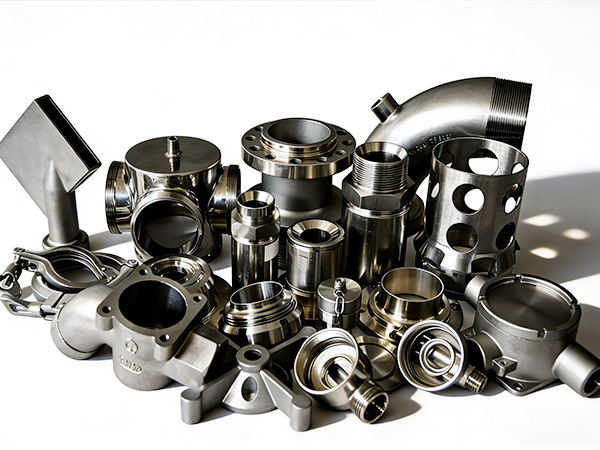
Forged and CNC-machined fittings are especially important in high-pressure chemical reactors and transfer lines.
4. Temperature Stability in Chemical Reactions
Many chemical processes involve high or low temperatures.
Fitting functions include:
Maintaining strength at elevated temperatures
Preventing thermal deformation or expansion leakage
Supporting cryogenic stability in low-temperature systems
Alloy and stainless steel fittings are commonly used in reactors, distillation columns, and heat exchange systems.
5. Ensuring Compatibility with Aggressive Media
Chemical plants handle a wide range of reactive substances.
Pipe fittings ensure compatibility by:
Using chemically inert materials (e.g., PTFE, Hastelloy)
Avoiding galvanic corrosion between dissimilar metals
Preventing chemical degradation of seals and joints
This reduces unexpected chemical reactions within pipelines.
6. Safe Flow Control and System Stability
Proper fitting design helps control fluid behavior.
Key benefits:
Smooth internal flow reduces turbulence and pressure spikes
Elbows and reducers optimize directional flow
Correct sizing prevents backpressure buildup
Stable flow conditions reduce mechanical stress and system hazards.
7. Explosion and Fire Risk Reduction
In flammable chemical environments, safety is critical.
Pipe fittings contribute by:
Providing spark-resistant materials in sensitive zones
Ensuring tight sealing to prevent vapor leaks
Supporting grounding and anti-static system design
This reduces the risk of ignition in volatile environments.
8. Supporting Emergency Shutdown Systems
Chemical plants rely on safety shutdown mechanisms.
Pipe fittings are used in:
Emergency isolation valves
Relief valve connections
Pressure release systems
Reliable fittings ensure these safety systems function instantly and correctly during emergencies.
9. Hygienic and Contamination Control
In specialty chemical and pharmaceutical production:
Smooth internal surfaces prevent residue buildup
Dead-leg-free design reduces contamination zones
Easy disassembly supports cleaning and inspection
This ensures product purity and safe chemical handling.
10. Compliance with Safety Standards
Chemical plant pipe fittings must meet strict international regulations:
ASME B31.3 – Process piping safety code
ASTM A182 / A403 – Material specifications
ISO 9001 – Quality management systems
NACE MR0175 – Sour corrosion environments
PED (Pressure Equipment Directive) – European safety standard
Compliance ensures global safety and reliability.
11. Common Safety Risks Prevented by Proper Fittings
Toxic gas leakage
Acid or alkali corrosion failure
Pressure rupture and explosion
Joint loosening due to vibration
Cross-contamination between chemical lines
Proper design and maintenance significantly reduce these risks.
12. Maintenance and Inspection for Ongoing Safety
Even high-quality fittings require regular inspection:
Check for corrosion or cracking
Inspect thread and flange sealing integrity
Monitor vibration-induced loosening
Perform pressure testing periodically
Preventive maintenance ensures long-term operational safety.
Conclusion
Pipe fittings are essential safety components in chemical production systems. They ensure leak-free operation, corrosion resistance, pressure stability, and safe handling of aggressive chemical media. Through proper material selection, precision manufacturing, and strict compliance with international standards, pipe fittings significantly reduce operational risks and enhance overall plant safety.
In modern chemical engineering, reliable piping systems are a fundamental safeguard for protecting both personnel and the environment.
References
ASME B31.3 – Process Piping Code for Chemical Plants
ASTM A182 / A403 – Stainless Steel Pipe Fitting Standards
NACE MR0175 / ISO 15156 – Corrosion-Resistant Materials
ISO 9001 – Quality Management Systems Requirements
Perry’s Chemical Engineers’ Handbook, McGraw-Hill
 Recommended Products
.jpg)
.jpg)
.jpg)
.jpg)
.jpg) Contact us
Contact us
—— Contact:Mr. Meng
—— Tel:+86 18233783692
—— Email:mengfy001@gmail.com
—— Url:https://www.kiyama-pipefitting.com
—— Address:Cangzhou Economic and Technological Development Zone, Cangzhou City, Hebei Province, China