

NewsDetails
How Pipe Fittings Improve Efficiency in Food Processing Equipment
author:Kiyama time:2026-04-14 18:56:07 Click:160
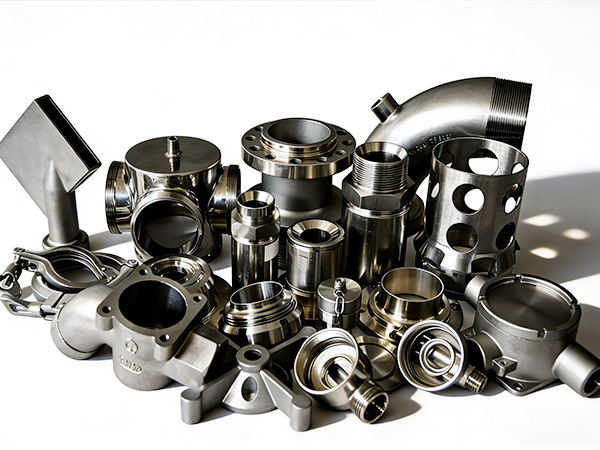
Pipe fittings play a crucial role in food processing systems by ensuring safe, hygienic, and efficient transportation of liquids, gases, and semi-solid materials. In modern food production lines—such as dairy, beverage, brewing, and processed food industries—properly designed piping systems directly impact productivity, product quality, and operational efficiency.
Ensuring Hygienic Fluid Transfer
One of the most important roles of pipe fittings in food processing is maintaining hygiene.
Key contributions:
Smooth internal surfaces reduce bacterial growth
Stainless steel fittings (especially 304 and 316L) resist corrosion and contamination
Hygienic designs eliminate dead zones where residues can accumulate
By maintaining sanitary conditions, pipe fittings help ensure food safety compliance with standards such as HACCP and FDA requirements.
Improving Flow Efficiency
Efficient fluid flow is essential for consistent production.
How fittings improve flow:
Elbows and bends are designed to minimize turbulence
Gradual reducers maintain stable flow velocity
Properly sized fittings reduce pressure drops
Smooth flow paths ensure consistent mixing, heating, and cooling in food processing systems.
Reducing Pressure Loss and Energy Consumption
Poorly designed piping systems can lead to energy inefficiency.
Benefits of optimized fittings:
Reduced friction losses in pipelines
Lower pumping energy requirements
Stable pressure distribution across the system
This leads to reduced operational costs and improved system performance.
Enhancing System Flexibility and Layout Design
Food processing plants require flexible and modular equipment layouts.
Pipe fittings provide:
Easy connection between processing units
Adaptability for system expansion or modification
Efficient routing around equipment and machinery
This flexibility supports scalable production systems.
Supporting Clean-in-Place (CIP) Systems
CIP systems are widely used in food processing for automated cleaning.
Role of pipe fittings:
Enable smooth circulation of cleaning solutions
Ensure full coverage of internal pipe surfaces
Prevent residue buildup in joints and connections
Proper fitting design ensures effective and efficient cleaning cycles.
Improving Temperature Control Efficiency
Many food processes require precise temperature control.
Contributions of pipe fittings:
Enable integration of heat exchangers and cooling systems
Maintain stable flow in heating and cooling circuits
Reduce heat loss through well-insulated connections
This ensures consistent product quality in processes like pasteurization and fermentation.
Reducing Maintenance Downtime
Reliable pipe fittings reduce system failures and maintenance interruptions.
Advantages:
Corrosion-resistant materials extend service life
Leak-free connections reduce repair frequency
Modular designs allow quick replacement of components
Less downtime directly improves production efficiency.
Ensuring Precise Metering and Mixing
Accurate dosing is critical in food production.
Pipe fittings help by:
Maintaining consistent flow rates
Supporting precise injection of additives and ingredients
Reducing pulsation and flow instability
This ensures uniform product quality across batches.
Compatibility with Food-Grade Materials
Food processing requires strict material standards.
Common materials used:
304 stainless steel for general food applications
316L stainless steel for acidic or high-salinity environments
Polished internal surfaces for hygienic performance
These materials ensure compliance with international food safety regulations.
Reducing Contamination Risk
Properly designed pipe fittings minimize contamination risks.
Key features:
Seamless welding or sanitary clamp connections
Leak-proof sealing systems
Easy disassembly for inspection and cleaning
This is essential for preventing cross-contamination between production batches.
Supporting Automation and Modern Processing Systems
Modern food plants rely heavily on automation.
Pipe fittings contribute by:
Integrating with automated valves and sensors
Supporting real-time flow control systems
Enabling smart monitoring of pressure and temperature
This enhances production accuracy and efficiency.
Conclusion
Pipe fittings are essential components in food processing equipment that significantly improve system efficiency, hygiene, and reliability. By optimizing flow paths, reducing pressure losses, supporting CIP systems, and ensuring sanitary conditions, they contribute directly to higher productivity and consistent product quality.
In modern food manufacturing, well-designed piping systems are not just support structures—they are a core part of efficient, safe, and automated production processes.
References
FDA Food Code – Sanitary Design Requirements for Food Equipment
EHEDG Guidelines – Hygienic Design of Food Processing Equipment
ASME BPE – Bioprocessing Equipment Standards
Crane Co. Flow of Fluids Through Valves, Fittings, and Pipe (TP-410)
Marriott, N. & Gravani, R. Principles of Food Sanitation, Springer
 Recommended Products
.jpg)
.jpg)
.jpg)
.jpg)
.jpg) Contact us
Contact us
—— Contact:Mr. Meng
—— Tel:+86 18233783692
—— Email:mengfy001@gmail.com
—— Url:https://www.kiyama-pipefitting.com
—— Address:Cangzhou Economic and Technological Development Zone, Cangzhou City, Hebei Province, China