

NewsDetails
CNC Machining Precision Pipe Fittings – Manufacturing Process and Quality Control
author:Kiyama time:2026-07-03 19:44:35 Click:156
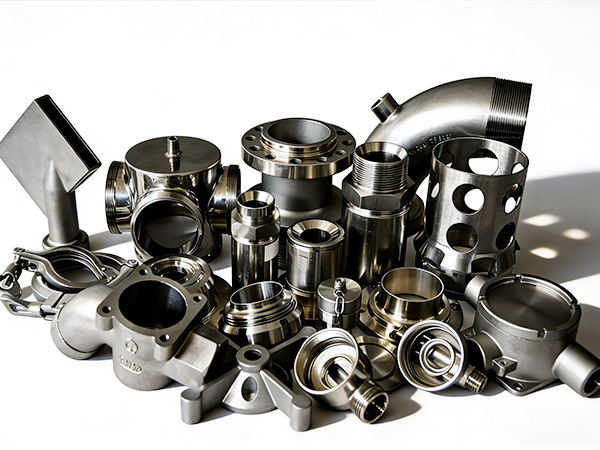
CNC (Computer Numerical Control) machining plays a critical role in manufacturing precision pipe fittings. While investment casting forms the basic shape, CNC machining refines critical dimensions, creates threaded connections, and ensures proper fit with mating components. This article examines the CNC machining process for stainless steel pipe fittings and what buyers should know when selecting a machining supplier or manufacturing partner.
CNC Equipment and Manufacturing Capabilities
Modern CNC machining for pipe fittings employs multi-axis machining centers capable of completing complex geometries in fewer setups. 3-axis machines handle basic milling and drilling operations effectively. 4-axis and 5-axis machines enable simultaneous machining of multiple faces, reducing cumulative positioning errors and improving dimensional consistency across production batches. The ability to complete parts in fewer setups directly translates to better quality and lower cost.
Swiss-type CNC lathes excel at producing small, complex fittings with high length-to-diameter ratios. These machines provide support close to the cutting tool, minimizing deflection and enabling tight tolerances on long, thin parts that would deflect excessively on conventional lathes. For high-volume production, CNC machining centers with automatic tool changers and pallet systems maintain productivity while preserving accuracy. Manufacturers who invest in modern CNC equipment demonstrate commitment to quality and delivery reliability for their customers.
Programming and Process Planning for Complex Geometries
Effective CNC machining starts with proper programming based on detailed CAD models. Models of the fitting are imported into CAM (Computer-Aided Manufacturing) software, which generates toolpaths based on specified cutting strategies. Experienced programmers consider factors such as tool deflection, chip evacuation, and thermal expansion when developing machining sequences. This upfront planning prevents quality issues and optimizes cycle times for cost-effective production.
For cast fittings, the programming must account for casting variations. Adaptive machining strategies adjust cutting paths based on actual part geometry measured by in-process probing systems. This approach ensures consistent final dimensions even when castings have minor variations from the nominal geometry. Suppliers with advanced programming capabilities and probing systems deliver better quality and longer tool life, ultimately reducing costs for their customers through optimized processes and reduced scrap rates.
Cutting Tools and Machining Strategies for Stainless Steel
Stainless steel presents machining challenges including work hardening, built-up edge formation, and high cutting forces. Proper tool selection is essential for achieving good surface finish and dimensional accuracy. Carbide cutting tools with appropriate coatings (TiAlN, TiCN, or AlCrN) provide wear resistance and reduce friction during cutting. Positive rake angles and sharp cutting edges minimize work hardening, which can make subsequent machining passes more difficult and reduce tool life.
Machining strategies for stainless steel emphasize consistent chip formation. Climb milling reduces heat buildup compared to conventional milling. Peck drilling prevents chip packing in deep holes, which can cause tool breakage or poor surface finish. Thread milling produces more accurate threads than tapping, particularly in hard materials or when threading close to a shoulder where tap breakage is a risk. Experienced machinists understand how to balance material removal rates with tool life to optimize both quality and manufacturing cost for their customers.
Tolerance Control and Dimensional Measurement
Precision pipe fittings require tight dimensional tolerances to ensure proper assembly and leak-free operation. Threaded fittings must meet thread form standards such as ASME B1.20.1 for NPT threads or ISO 7-1 for BSPT threads. Flange facing flatness, bolt hole spacing, and bore concentricity all affect final assembly performance and must be controlled precisely. CNC machining achieves tolerances of ±0.01 mm on critical dimensions when properly programmed and executed with appropriate workholding.
Dimensional verification uses multiple tools and techniques. Coordinate measuring machines provide comprehensive dimensional analysis for complex geometries. Thread gauges (ring gauges for external threads, plug gauges for internal threads) verify thread acceptability per applicable standards. Surface roughness testers quantify Ra and Rz values for surface finish validation. Statistical process control tracks dimensional trends across production runs, enabling early detection of process drift before out-of-tolerance parts are produced. This proactive quality approach prevents defective parts from reaching customers.
Surface Finish and Post-Machining Treatment
CNC machined surfaces exhibit characteristic tool marks that may affect performance in some applications. For applications requiring smooth surfaces, additional finishing operations such as sanding, buffing, or electropolishing may be specified. Machining parameters influence surface finish significantly—higher spindle speeds, lower feed rates, and sharp tools produce better surface quality. Specifying appropriate surface finish requirements helps ensure fitness-for-purpose without over-specifying, which increases cost unnecessarily.
Deburring is essential after machining operations. Sharp edges and burrs can interfere with assembly or create stress concentration points that initiate cracks in service. Manual deburring, tumbling, or abrasive flow machining remove burrs from internal passages and hard-to-reach areas. Some suppliers use electrochemical deburring for complex internal geometries where mechanical deburring cannot reach. The choice of deburring method depends on part geometry, material, and specified surface requirements. Discussing deburring requirements with suppliers during design review helps ensure appropriate methods are selected.
Integration with Casting and Assembly Operations
CNC machining works best when integrated with casting and assembly operations under a single quality system. Castings should be designed with appropriate machining allowances on critical surfaces—typically 1-2 mm per side depending on part size and casting process capability. Datum features should be cast or machined to provide repeatable positioning for CNC operations. This integration ensures that machining operations are performed consistently relative to part features that affect final assembly.
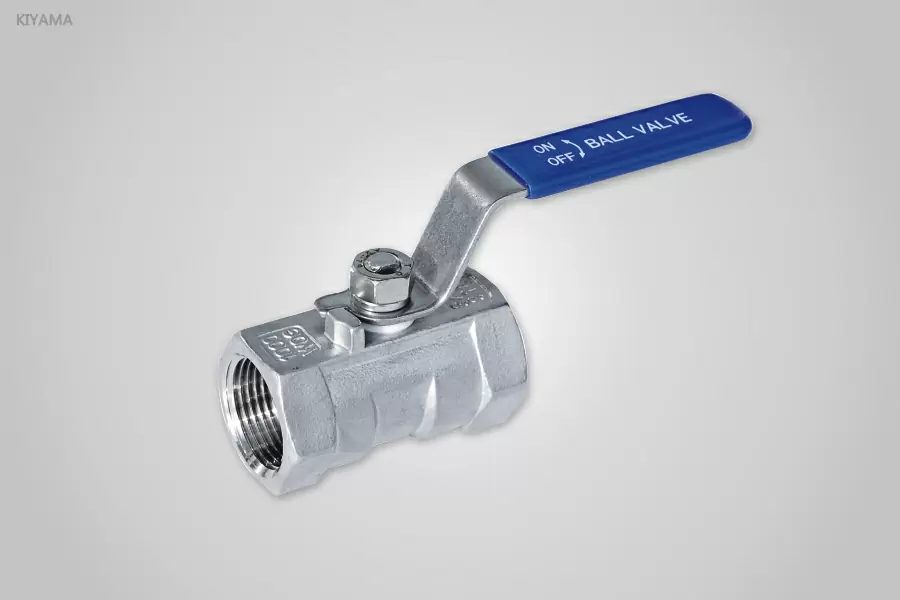
For assembled fittings such as ball valves or union connections, CNC machining ensures proper alignment of mating components. Bore concentricity, face perpendicularity, and thread alignment all affect assembly performance and leak-tightness. Suppliers offering integrated casting, machining, and assembly services provide better overall quality control compared to those requiring subcontractors for different operations. This vertical integration represents a significant advantage for buyers seeking reliable supply partners who can manage the entire manufacturing process under a single quality system.
References
ISO 10791 - Test conditions for machining centres
ASME B1.20.1 - Pipe Threads, General Purpose (Inch)
ISO 7-1 - Pipe threads where pressure-tight joints are made on the threads
Society of Manufacturing Engineers - CNC Machining Handbook
API Specification Q1 - Specification for Quality Management System Requirements
 Recommended Products
.jpg)
.jpg)
.jpg)
.jpg)
.jpg) Contact us
Contact us
—— Contact:Mr. Meng
—— Tel:+86 18233783692
—— Email:mengfy001@gmail.com
—— Url:https://www.kiyama-pipefitting.com
—— Address:Cangzhou Economic and Technological Development Zone, Cangzhou City, Hebei Province, China