

NewsDetails
How to Select a Quality Pipe Fittings Supplier | Buyer Guide
author:Kiyama time:2026-06-20 17:52:49 Click:118
Selecting the right pipe fittings supplier determines project success more than most procurement professionals realize. Poor-quality fittings cause leaks, shutdowns, and expensive repairs. Conversely, an exceptional supplier delivers components that perform reliably for decades. This guide equips buyers with practical evaluation criteria for making informed sourcing decisions.
.jpg)
Verify Industry Certifications
Legitimate manufacturers hold recognized certifications that demonstrate commitment to quality management systems. ISO 9001 certification indicates the supplier operates documented quality procedures covering every aspect of production. Buyers should request current certificates and verify their validity through the issuing registrar.
Industry-specific certifications carry additional weight in specialized applications. Suppliers serving the pharmaceutical sector often maintain FDA registration and follow cGMP guidelines. Food and beverage applications may require 3-A sanitary standards compliance. Oil and gas suppliers should demonstrate API Q1 certification or equivalent quality programs.
Third-party inspections provide independent verification of manufacturing capabilities. Organizations like Bureau Veritas, SGS, and TÜV offer supplier audits that examine facilities, processes, and quality records. A supplier willing to accommodate third-party inspections demonstrates transparency and confidence in their operations.
Assess Material Standards Compliance
Stainless steel fittings must conform to recognized material specifications that guarantee corrosion resistance and mechanical properties. ASTM A403 defines wrought stainless steel piping fittings, while ASTM A815 covers wrought and cast duplex fittings. Confirm that suppliers maintain material test certificates conforming to EN 10204 3.1 or 3.2.
Alloy verification protects against counterfeit or out-of-specification materials. Reputable factories perform positive material identification (PMI) testing using portable spectrometers. This verification confirms the actual alloy composition matches certifications, preventing premature failures from material mismatches.
Traceability systems track materials from raw stock through finished products. When field failures occur, traceability enables root cause analysis and targeted recalls. Request samples of actual mill test reports to evaluate the comprehensiveness of the supplier's traceability program.
Evaluate Production Capabilities
Manufacturing capacity determines whether a supplier can meet volume requirements and delivery schedules. Visit facilities when possible—firsthand observations reveal more than paper certifications. Watch for organized workstations, modern equipment, and adequate inventory management systems.
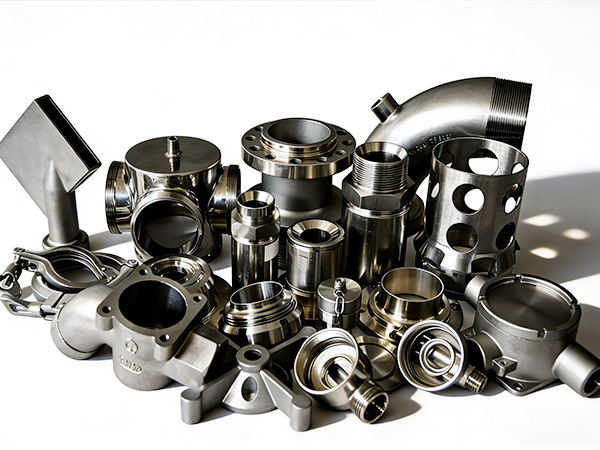
Technical capabilities vary significantly among suppliers. Advanced factories employ CNC machining centers capable of tight tolerances and complex geometries. Investment casting facilities produce intricate fittings that require minimal post-casting machining. Understanding the supplier's manufacturing methods helps match capabilities to application requirements.
Lead times and production flexibility matter considerably for project work. Confirm the supplier's standard lead times and ability to accommodate rush orders. A responsive manufacturer adjusts production schedules to meet changing project timelines without sacrificing quality.
Examine Quality Control Processes
Comprehensive quality control extends beyond final inspection. Progressive manufacturers implement in-process controls that catch defects before they become expensive. Ask about inspection frequency at critical manufacturing stages and documentation practices.
Testing capabilities reveal the supplier's commitment to product reliability. At minimum, facilities should perform dimensional inspection, visual examination, and hydrostatic testing. Advanced suppliers offer additional non-destructive testing including liquid penetrant testing, ultrasonic examination, and positive material identification.
Request copies of actual inspection reports for sample products. The format, detail level, and completeness of documentation speaks volumes about quality maturity. Suppliers providing thorough, well-organized records typically apply similar rigor to manufacturing operations.
Assess Communication and Service Quality
Responsive communication separates excellent suppliers from problematic ones. Evaluate response times during the qualification process—if the supplier struggles to answer basic inquiries, ongoing relationships will prove frustrating. Technical questions deserve knowledgeable, detailed responses.
Engineering support capabilities matter for custom applications. Can the supplier provide material recommendations for unusual service conditions? Do they offer custom manufacturing for non-standard fittings? Capable suppliers act as technical partners rather than simply filling orders.
Problem resolution demonstrates supplier commitment when issues arise. Inquire about warranty policies and historical claim rates. Request references from similar applications to verify real-world performance. A supplier with nothing to hide readily connects potential buyers with satisfied customers.
Consider Total Cost of Ownership
Price alone rarely indicates value in pipe fittings procurement. Higher-quality fittings cost more initially but deliver lower lifecycle costs through reduced failures and maintenance. Compare total costs including initial purchase, installation, expected service life, and potential failure consequences.
Shipping and logistics affect overall costs significantly. Local or regional suppliers may offer advantages in shipping costs and delivery flexibility. Evaluate packaging quality—proper protection prevents transit damage that creates downstream problems.
Inventory programs reduce buyer carrying costs while ensuring material availability. Just-in-time delivery arrangements benefit buyers with limited storage capacity. Discuss buffer stock arrangements and order release procedures during qualification.
References
ISO 9001:2015: Quality management systems — Requirements. International Organization for Standardization.
ASTM A403/A403M-21: Standard Specification for Wrought Stainless Steel Piping Fittings. ASTM International.
EN 10204:2004: Metallic products — Types of inspection documents. European Committee for Standardization.
Juran, J. M., & Godfrey, A. B. (1999). Juran's Quality Handbook. McGraw-Hill Professional.
 Recommended Products
.jpg)
.jpg)
.jpg)
.jpg)
.jpg) Contact us
Contact us
—— Contact:Mr. Meng
—— Tel:+86 18233783692
—— Email:mengfy001@gmail.com
—— Url:https://www.kiyama-pipefitting.com
—— Address:Cangzhou Economic and Technological Development Zone, Cangzhou City, Hebei Province, China