

NewsDetails
Investment Casting vs Sand Casting for Pipe Fittings | Manufacturing Methods Compared
author:Kiyama time:2026-06-23 21:09:04 Click:79
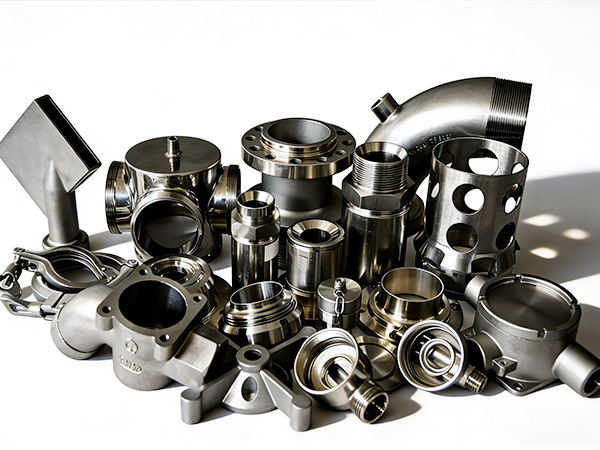
Choosing between investment casting and sand casting significantly impacts the quality, cost, and performance of stainless steel pipe fittings. Each method offers distinct advantages suited to specific applications. Factory engineers and procurement specialists benefit from understanding these differences when specifying manufacturing processes.
.jpg)
Understanding Investment Casting
Investment casting employs a removable pattern surrounded by refractory ceramic material to create molds. The process produces exceptional dimensional accuracy and smooth surface finishes without extensive post-casting machining. Manufacturers favor this method for complex geometries with intricate internal features.
The term "lost-wax casting" describes the pattern removal step, where wax or plastic patterns melt out before metal pouring. This leave-behind cavity precisely mirrors the original pattern dimensions. Because ceramic molds maintain stability at extreme temperatures, the resulting castings exhibit minimal dimensional variation.
A typical supplier utilizing investment casting achieves tolerances within ±0.005 inches on critical dimensions. Surface finishes generally fall between Ra 63 and Ra 125 microinches, often eliminating the need for secondary finishing operations. Complex internal passageways that would prove impossible with sand casting become straightforward with this method.
Understanding Sand Casting
Sand casting relies on compacted sand molds to shape molten metal. Foundries create patterns from wood, metal, or polymer, then compress sand around these patterns to form negative impressions. After pattern removal, workers pour molten stainless steel into the resulting cavities.
The rougher surface texture of sand molds transfers to casting surfaces, typically producing Ra 125 to Ra 250 microinch finishes. Greater post-casting machining becomes necessary to achieve smooth sealing surfaces and precise dimensions. Tolerances generally range from ±0.030 to ±0.060 inches for typical sand cast fittings.
The equipment and tooling investment remains substantially lower than investment casting operations. Smaller factories and specialized foundries economically produce lower-volume fittings using this method. Lead times for tooling preparation are considerably shorter, enabling faster prototyping and small-batch production.
Surface Finish Comparison
Surface finish quality directly affects gasket performance and leak integrity in piping systems. Investment cast fittings present smoother bearing surfaces that promote optimal gasket seating. The reduced surface roughness minimizes potential leak paths along the joint interface.
Sand cast fittings require more aggressive machining to achieve equivalent surface quality. Material removal operations consume additional material and extend production cycles. While acceptable for non-critical applications, the extra machining adds cost and may introduce dimensional variability.
Thread quality demonstrates particularly significant differences. Investment cast threads nearly eliminate the need for thread cutting, preserving original metallurgy. Sand cast threads demand substantial machining that may compromise thread integrity and strength.
Dimensional Accuracy Analysis
Precision fittings demand tight dimensional controls that influence assembly compatibility and leak-free operation. Investment casting delivers the accuracy required for standard slip-on, butt weld, and socket weld fittings without extensive in-process verification.
Sand casting's looser tolerances necessitate sorting and selective assembly in many applications. Workers measure each fitting individually, setting aside those requiring additional machining. This inspection overhead consumes labor hours and extends delivery schedules.
Wall thickness consistency varies more dramatically in sand castings due to pattern wear and sand compression differences. Thin sections risk premature failure under pressure cycling, while thick sections add unnecessary material cost. Investment castings maintain uniform wall sections that optimize strength-to-weight ratios.
Cost Considerations
Initial tooling investments differ substantially between methods. Investment casting requires expensive metal dies for pattern injection and ceramic shell processing equipment. Sand casting utilizes less expensive wood or aluminum patterns that smaller suppliers can afford readily.
Per-unit production costs favor sand casting for high-volume, simple geometry fittings. The faster mold preparation and lower material scrap rates offset the need for additional machining. However, investment casting becomes more economical for complex fittings requiring minimal post-casting work.
Total landed cost analysis—incorporating material, labor, machining, inspection, and rework—typically favors investment casting for critical service applications. Less frequent field failures and reduced warranty claims compensate for higher initial costs.
Application Suitability
Investment casting serves as the preferred method for fittings destined for demanding service conditions. Chemical processing, food and beverage, pharmaceutical, and offshore applications require the reliability that investment castings provide. These industries accept premium pricing in exchange for demonstrated performance.
Sand casting accommodates non-critical water, air, and low-pressure steam installations. Utility construction and building services commonly specify sand cast fittings where extreme purity or pressure cycling does not occur.
A capable manufacturer offers both casting methods, recommending the appropriate option based on application requirements, volume needs, and budget constraints. This flexibility enables the supplier to serve diverse market segments without compromising quality or profitability.
References
Brown, J. R. (2000). Foseco Ferrous Foundryman's Handbook. Butterworth-Heinemann.
ASM International. (2008). Castings: Vol. 15. ASM Handbook Series. ASM International.
Cengel, Y. A., & Boles, M. A. (2014). Thermodynamics: An Engineering Approach. McGraw-Hill Education.
PM PA Consultant. (1994). Casting Design and Configuration. Society of Manufacturing Engineers.
 Recommended Products
.jpg)
.jpg)
.jpg)
.jpg)
.jpg) Contact us
Contact us
—— Contact:Mr. Meng
—— Tel:+86 18233783692
—— Email:mengfy001@gmail.com
—— Url:https://www.kiyama-pipefitting.com
—— Address:Cangzhou Economic and Technological Development Zone, Cangzhou City, Hebei Province, China